Everyone wants a brighter smile, but the whitening market is full of confusing options — from ₹200 "whitening toothpastes" to ₹15,000+ in-clinic treatments. Here's what's actually worth your money.
Why teeth get discolored in the first place
Staining comes from two sources: surface stains (tea, coffee, tobacco, red wine) that build up on enamel, and deeper discoloration from aging, certain medications, or the natural yellowing of dentin beneath the enamel. Each responds differently to whitening.
Option 1: Whitening toothpaste
These use mild abrasives to remove surface stains only — they cannot change your teeth's actual shade. Useful for maintenance, not a real fix for yellowing.
Option 2: At-home whitening kits (strips, gels)
Over-the-counter kits use lower concentrations of peroxide and are one-size-fits-all, which often means uneven results and gum irritation if the fit is poor. Results are modest and temporary.
Option 3: In-clinic professional whitening
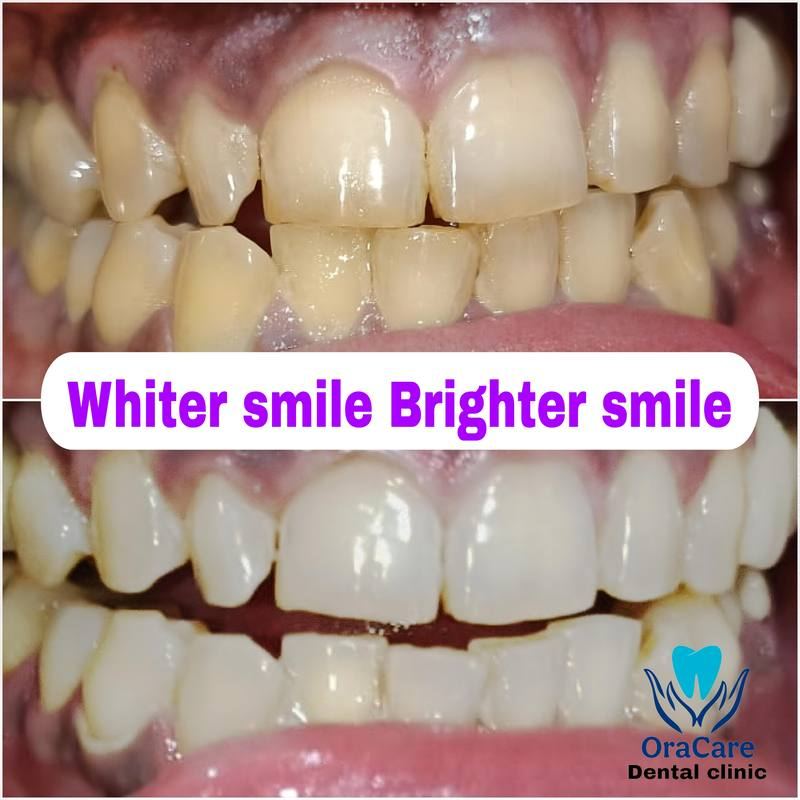
This uses a much higher concentration of whitening gel, applied precisely with gums protected, often accelerated with a special light. Results are visible after a single session — typically 4–8 shades brighter — and are far more predictable than at-home options.
Realistic cost ranges in Baranagar/Kolkata
- Whitening toothpaste: ₹150–400 (ongoing, minimal results)
- At-home kits: ₹800–2,500 (modest, temporary results)
- In-clinic professional whitening: typically ₹6,000–15,000 depending on the technique and number of sessions, with results lasting 1–3 years depending on your habits
Exact pricing depends on your teeth's current condition and the specific technique used — we always give a clear quote after an examination, not before.
What actually makes whitening last longer
- Cutting back on tea, coffee, red wine and tobacco for the first 48 hours after treatment, when teeth are most porous
- Using a straw for staining drinks going forward
- Getting a professional cleaning every 6 months to prevent stain buildup
Who should think twice about whitening
Whitening doesn't work on crowns, veneers or fillings — they won't change shade along with your natural teeth, which can create a mismatch. If you have several visible restorations, it's worth discussing this with your dentist before whitening.
Curious what shade improvement is realistic for you?
Dr. Tiasa Tilak can assess your teeth and give you an honest, personalized recommendation — no upselling.
Ask About Teeth Whitening